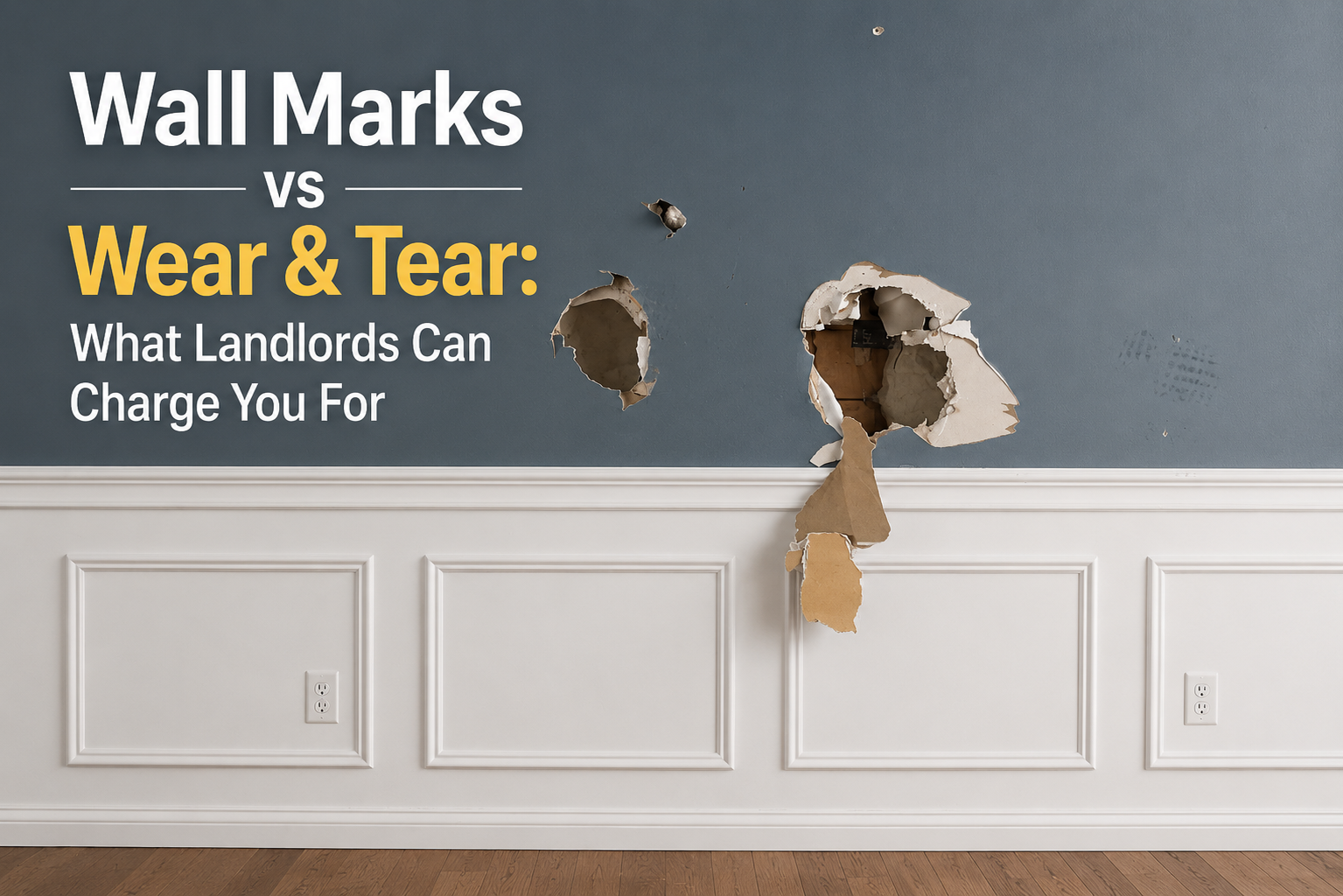
Wall Marks vs Wear & Tear: What Landlords Can Charge You For
Are you planning to move out of a rental property in Brisbane? One thing every renter thinks about is how to get their full bond back at the end of lease. Many renters are confused about whether wall marks in a rental property are considered normal fair wear and tear or property damage. Renters or landlords must understand the difference between wall marks vs wear & tear to avoid misunderstanding and bond disputes.
In this blog, you will learn what landlords can charge for, what comes under fair wear and tear, and how you can protect your bond amount in Brisbane.
Normal fair wear and tear is the natural deterioration of a rental property, which happens due to normal use over time. It is not caused by misuse of the rental property or intentionally by renters. As per the Queensland tenancy laws, landlords can not charge for the ordinary aging that happens during a tenancy.
Some common examples of normal wear and tear:
Minor scuff marks on walls from furniture.
Paint fading from sunlight.
Loose door or window handles.
Minor carpet flattening in high traffic areas.
Rubbing marks on furniture.
Small holes in walls used for hanging pictures.
All these issues are considered as part of living in a rental home, and landlords cannot claim for these issues from the rental bond.
What Is Counted as Tenant Damage in a Rental Property?
Tenant damage goes beyond the normal use, which happens due to carelessness, accident, negligence, or maliciousness of renters. If the rental property condition is damaged during the tenancy period, the property owner deducts the repair costs from the bond amount.
Some common examples of wall damage:
Visible large holes in plaster walls.
Damage caused by hooks and stickers.
Deep scratches and stains on the surface of walls.
Water damage caused by renters’ negligence.
Paint damage due to removal of posters.
What Wall Damage Can Landlords Charge Renters For In Brisbane?
Landlords can only charge for wall damage if the property damage goes beyond normal use. Some factors are considered before applying wall damage charges to renters.
These are some factors that affect the charges of landlords.
Tenancy length
Entry condition of the rental property
Property damage level
Duration of rental property
Property cleaning effort from the renter at the end of lease
Some wall damage for which landlords may charge tenants.
Walls containing large holes or cracks.
Excessive grease or smoke marks in the walls.
Permanent visible stains in the walls.
Poor repainting of walls.
Wall damage by water.
Heavy scratches in the walls.
These are certain types of wall damage that may affect your bond refund. Because it requires repair or reprinting.
How You Can Avoid Wall Damage Charges at the End of Lease?
These are some useful tips that help you prevent wall damage during the tenancy period and increase your chances of getting your full bond amount during the move-out period.
Use removable hooks to avoid nails and strong adhesives in the walls.
Clean small stains and scuff marks early before they become permanent.
Avoid using cheap strong tapes.
Protect high-traffic areas to reduce rubbing and scratches in walls.
Check the entire rental property before the final inspection, which allows you to fix small issues.
Queensland tenancy laws say that landlords cannot charge tenants for ordinary deterioration caused by regular use. But renters are responsible for intentionally or accidentally damaging rental property.
Some important tenants’ rights:
Get proper bond deduction evidence from the landlord.
Landlord charges must be reasonable and justified.
Brisbane tenants can decline unfair bond claims.
Get an entry condition report during the move-in.
Conclusion
Brisbane landlords do not consider every wall mark as rental damage. Minor or small wall marks are treated as normal wear and tear, but excessive marks may lead to bond deductions.
If you maintain the rental property during tenancy and clean the entire property walls before moving out, it helps you to avoid landlord charges and increase your chances of getting your full bond back. If you want to hire a professional exit cleaning service in Brisbaneto deep clean the rental property, contact All Bond Clean Brisbane.
FAQs Regarding Brisbane Landlord Charges to Tenants:
Q1. What is considered as normal wear and tear on walls?
Ans: Brisbane landlords consider small scuff marks, faded paint, and minor damage on the walls from daily living as normal wear and tear.
Q2. Can Brisbane property owners charge renters for wall scuff marks?
Ans: If marks are deep or excessive in the wall, they can charge. But if scuff marks are small and reasonable, they treat it as normal wear and tear.
Q3. Should I clean rental property walls before moving out?
Ans: Yes, you can clean rental property walls before vacating a rental property to improve final inspection results and reduce the risks of bond deduction.
Q4. What is the cost of hiring a professional bond cleaner?
Ans: The estimated cost is between $250 and $800 for hiring a professional bond cleaner in Brisbane.
Q5. What can Brisbane landlords charge tenants for?
Ans: Brisbane landlords can charge tenants for rental property damage beyond normal wear and tear, like large holes in the walls, permanent stains, broken fixtures, and missing items at the end of lease. Landlords can also charge if you do not meet the cleaning standard.